🔥₹999 COURSE TODAY ONLY ₹99!

From Arguments to Understanding
Because it’s not just about behaviour.
It’s about understanding what’s really going on.
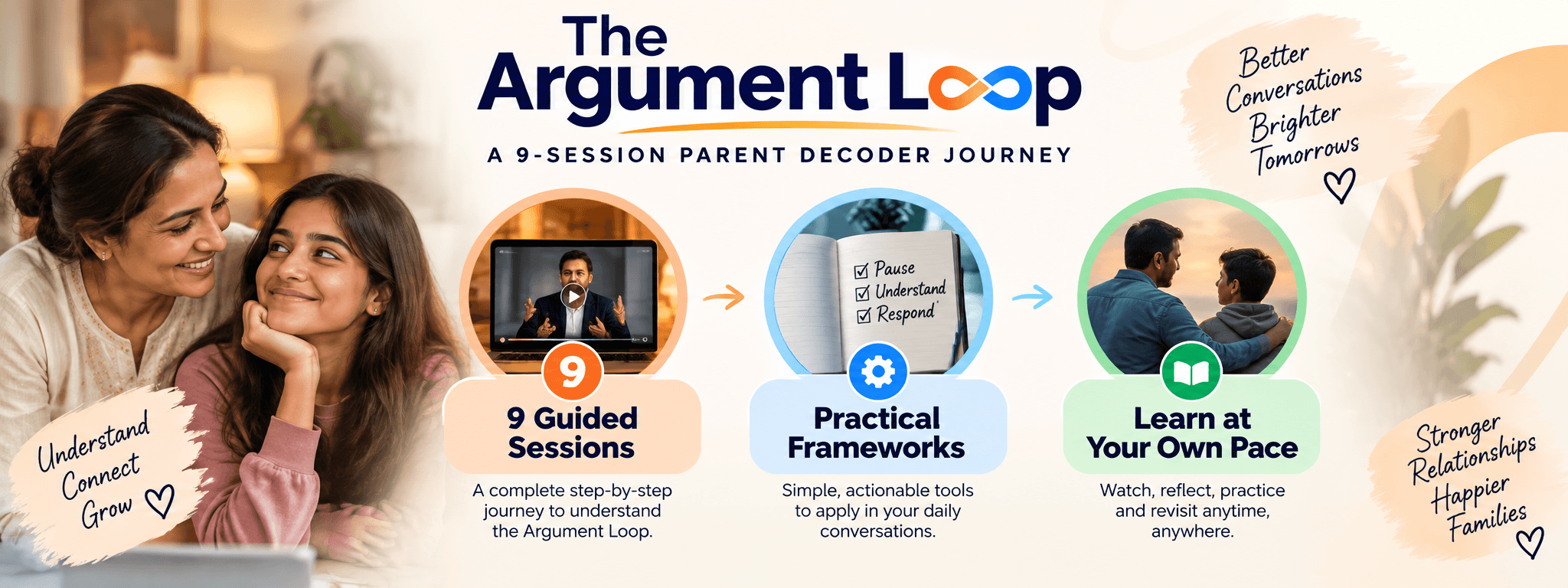
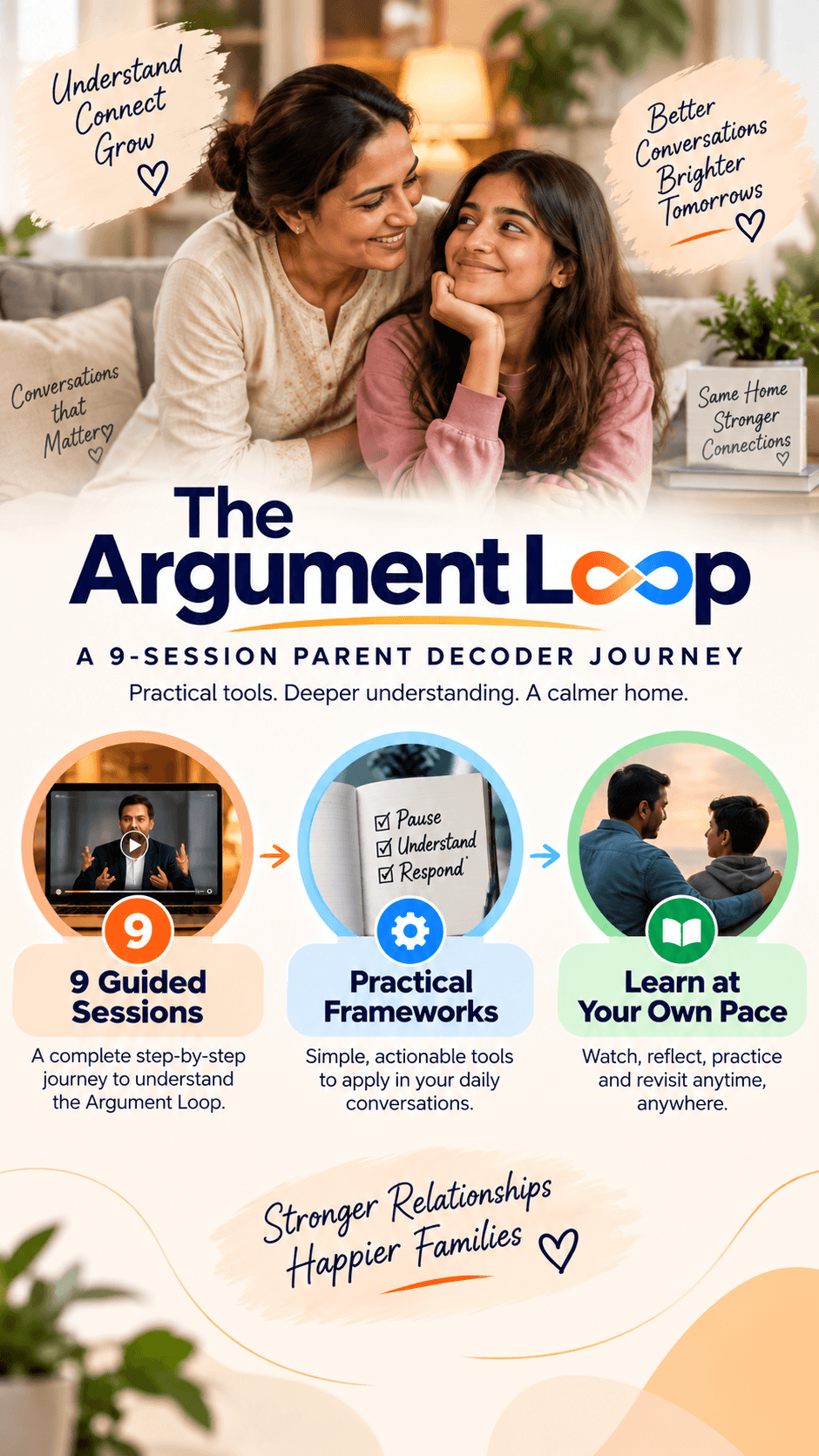
In these focused 9 sessions, discover why everyday conversations with your child can turn into arguments, what’s really driving them, and what you can do differently to create more calm, connection and cooperation at home.
Why Parents Win When They Understand the Argument Loop
When you understand the patterns behind everyday arguments, you create lasting positive change — not just fewer conflicts, but a calmer home, a closer relationship, and a more confident you as a parent.

Calmer Conversations
Understand what triggers arguments and learn how to respond with calmness instead of reacting — so everyday conversations become easier.

Stronger Parent-Child Bond
Decode what your child is really feeling and thinking — and build trust, openness and a deeper connection that lasts.

Practical Tools for Real Life
Get simple, easy-to-apply tools and frameworks to handle difficult moments with clarity, confidence and compassion.

A Happier, More Peaceful Home
Move from constant conflicts to cooperation — and create a positive home environment where everyone feels heard, respected and valued.
What You'll Learn In This Power-Packed 9 Sessions of Parent Decoder Session
A powerful journey to understand what is really happening between parents and teens — before the next argument begins.

Understand Why Arguments Keep Repeating
Discover how ordinary conversations about studies, mobile phones, friends, clothes, coming home and daily routines can turn into the same argument again and again.
Learn to recognize the Argument Loop before it escalates.
See Your Teen Through a New Lens
Your child is growing — but has your parenting changed with them?Understand how a child’s world, priorities, identity, choices, need for freedom and way of thinking change as they move toward adulthood.
Decode What Was Said vs. What Was Heard
Discover what may be happening underneath those words — and why their response may not mean what you think it means.

Learn Why Your Teen May Want a Conversation, Not a Lecture
Discover why even a child who wants to talk may slowly stop sharing when every conversation turns into studies, career, behaviour, values or advice.

Learn the First Step From Arguments to Understanding
Learn how to pause, observe the Argument Loop and understand what is happening before reacting.Because the first step toward changing the relationship is not changing your child.
THE 9-SESSION PARENT DECODER JOURNEY
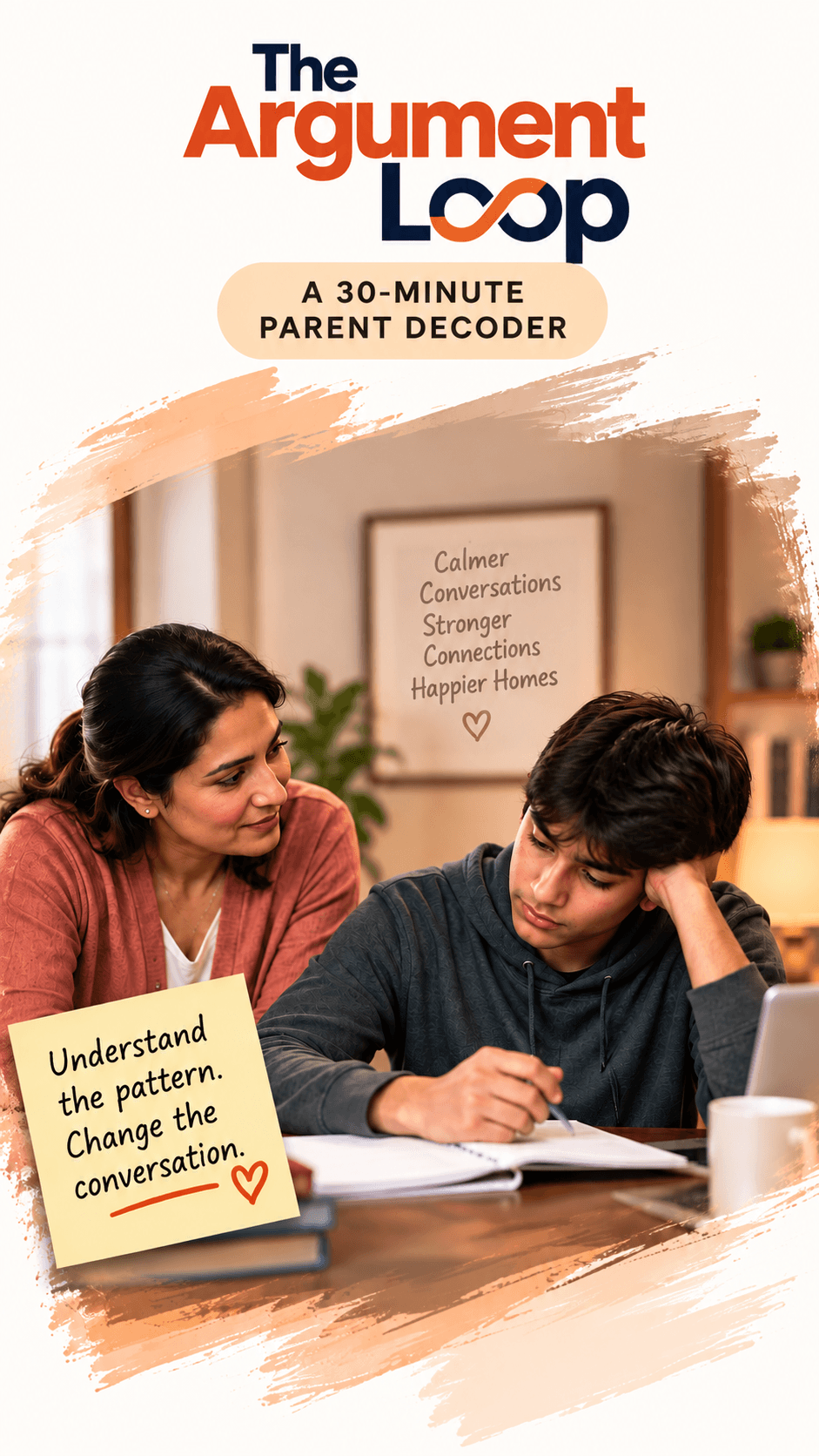
Each session builds on the previous one — helping you understand the pattern, see what’s really happening, and learn how to respond differently.
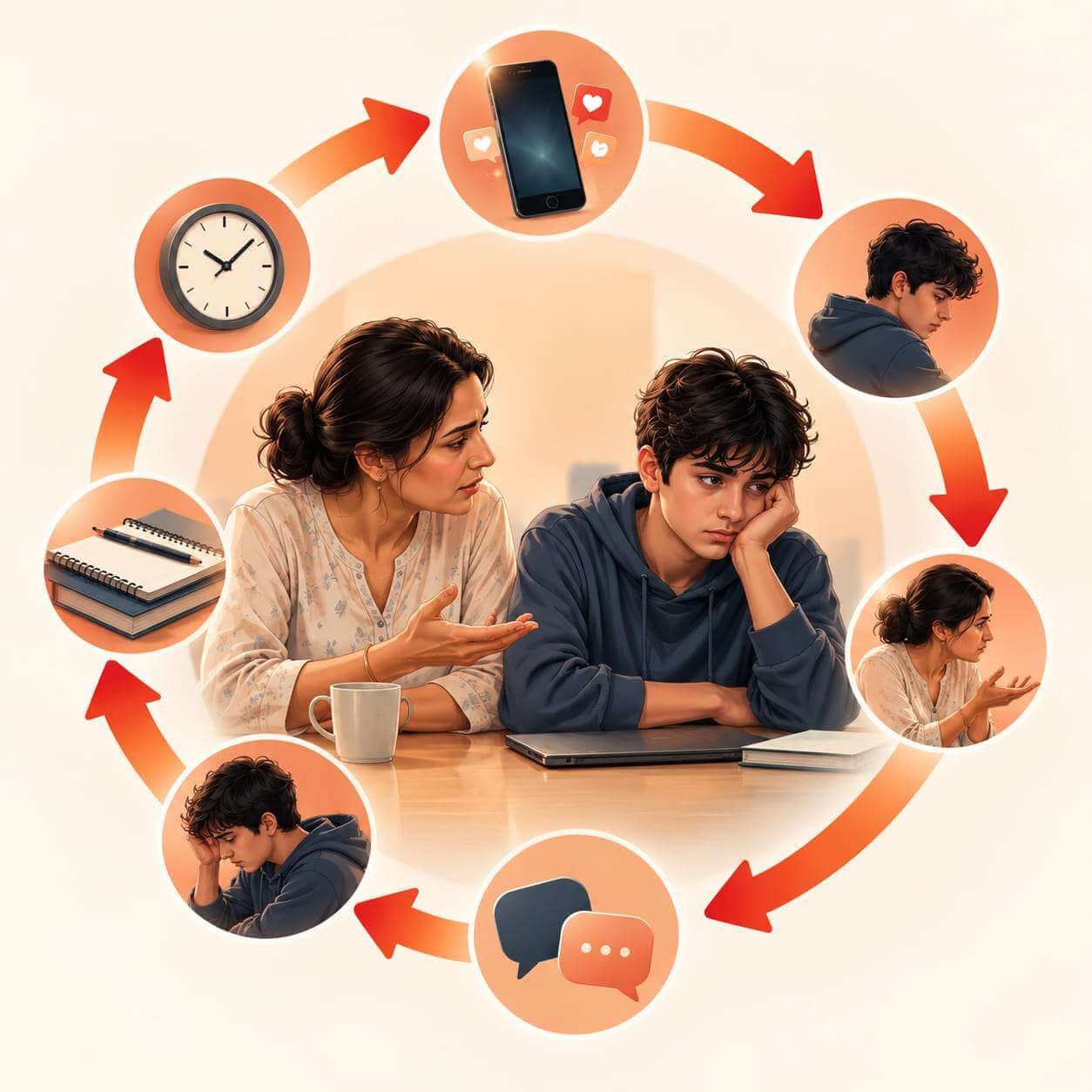
Phase 1: SEE THE LOOP
Understand Why Arguments Keep Repeating. Recognize why ordinary conversations about studies, phones, friends and routines can turn into recurring arguments.

Phase 2: SEE YOUR CHILD DIFFERENTLY
See growth, independence and behaviour differently.
Discover how your child’s growing need for independence, identity, choice and freedom changes the way they respond to you.

Phase 3: DECODE THE CONVERSATION
Understand the gap between what you say and what they hear.
Understand what you mean. Notice what your child hears. Recognize where meanings differ. Decode each other’s perspective. Turn misunderstanding into understanding.

Phase 4: REFLECT & RECONNECT
Notice your patterns, assumptions and communication habits.
Recognize your own past.Notice the assumptions you carry.Understand your communication patterns.See how they shape today’s conversations.Reconnect with your child with greater awareness.
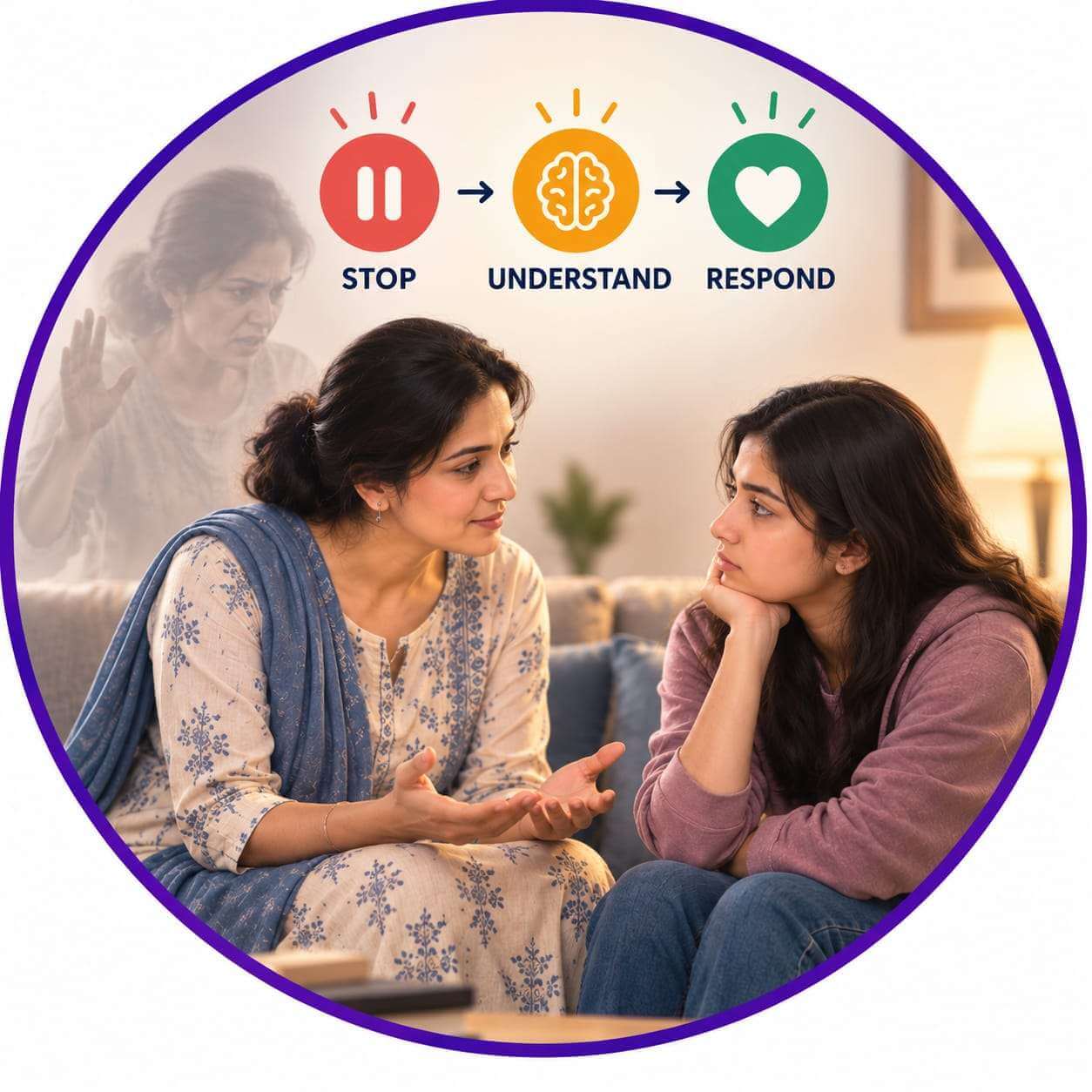
Phase 5: RESPOND DIFFERENTLY
STOP → UNDERSTAND → RESPOND
Pause before reacting.Understand what is really happening.Look beyond the immediate reaction.Respond with clarity, not automatically.Create a different outcome together.
Real Parents. Real Changes. Real Changes.
These are real, documented results from parents who attended The Argument Loop and applied what they learned.

Within 30 days of Implementing the Strategies

With Their Teen After Attending this Journey


The Argument Loop Is Designed For Parents Like You
Whether you’re looking for practical tools to handle daily arguments, understand your teen better, or create a calmer home — this journey gives you actionable strategies you can start using immediately.
Parents of Teenagers
Get practical tools to handlearguments, reduce stress, andbuild a stronger, more trustingrelationship with your teen.
Less Conflict. More Connection.

Parenting Coaches
Add a powerful, structured framework to your toolkit and help more parents break the argument cycle.
Deeper Insights. Greater Impact.

Schools & Institutions
Equip your parent communitywith research-backed strategiesto improve communication andemotional well-being.
Stronger Families. Better Learners.

Helping Parents Understand What's Happening Beneath The Behaviour
"The goal is not to teach parents how to control their teenagers. It is to help parents understand the patterns behind difficult behaviour and conversations."

“Most arguments between parents and teenagers are not battles for control. They are two people trying to be understood.”— Sunny Gupta
Sunny Gupta
Educator • School Leader • Parent Mentor • TEDx Speaker
For more than 20 years, Sunny Gupta has worked closely with children, teenagers, educators and parents, gaining a deep understanding of how children grow, how relationships change, and why communication between parents and teenagers can become difficult. His work goes beyond marks, discipline and behaviour. He focuses on the life skills, emotional understanding and relationships that shape a child's confidence and future. Through his work with parents, Sunny has observed a powerful truth: many parent-teen conflicts are not caused by a lack of love — they happen because the same words can carry completely different meanings for a parent and a child. That insight became the foundation of The Argument Loop — a practical framework designed to help parents see the pattern behind recurring arguments, understand their child's perspective, recognize their own reactions, and respond differently. “You don’t have to win every argument with your child. You have to understand what is happening inside it.”— Sunny Gupta. His mission is simple: help parents move from reacting to understanding — and from repeated arguments to stronger relationships.
When You Understand the Loop, Conversations Begin to Change
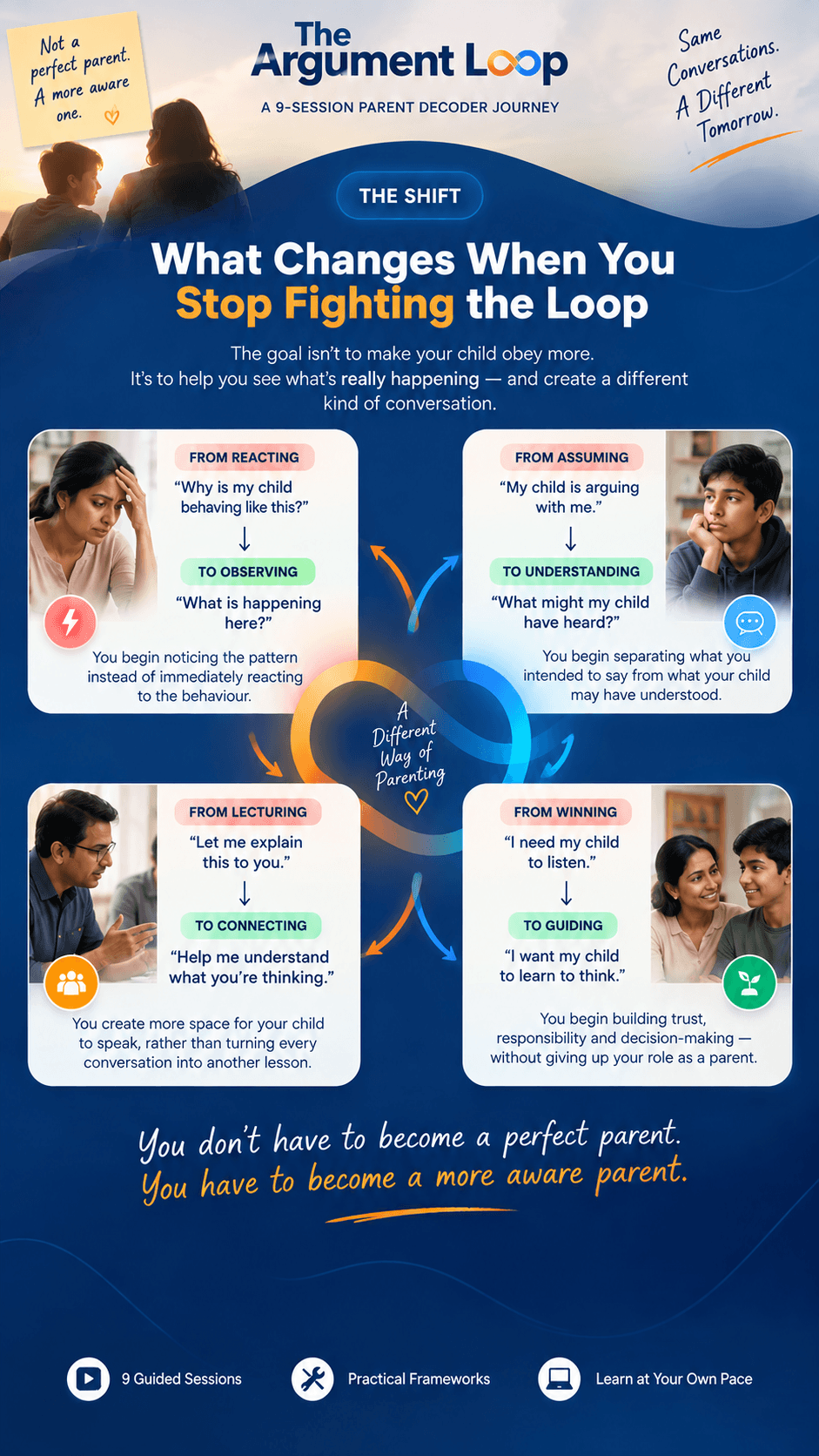
The goal isn't to make your child agree with everything you say.It's to help you understand each other better — so disagreement doesn't automatically become an argument.

“Maybe My Child Isn't The Problem. ”“I started noticing that many of our arguments weren't really about studies, phones or friends. We were often reacting to what we thought the other person meant. Once I began looking at the pattern, I could see the argument differently.”
“I Finally Started Hearing What My Child Was Saying.” “I realized that sometimes my child wasn't trying to argue with me. They were trying to express independence, frustration, confusion or simply a need to be heard. That changed the way I entered difficult conversations.”
“I Don't Have To React Immediately.” “The biggest change was learning to pause. Instead of immediately correcting, explaining or defending myself, I could stop, understand what was happening and then respond. The conversation became very different.”




You Don’t Have to Keep Having the Same Argument.
You may have tried explaining. You may have tried reminding. You may have tried being stricter. You may have even tried giving your child more freedom. And yet, somehow, the same conversations keep coming back. Studies. Phone. Friends. Coming home. Room. Choices. The problem may not be that you are a bad parent — or that your child is a difficult child. You may simply be caught in The Argument Loop. This 9-session journey will help you see the pattern, understand what may be happening beneath the conversation, recognize your own reactions, and learn to respond differently. Because you don't have to win every argument. You need to understand what is happening inside it.